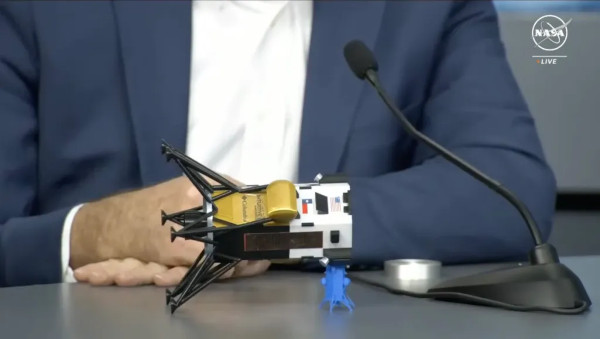
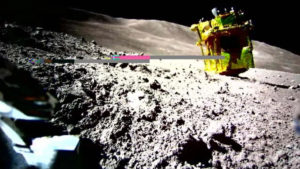
But Odysseus’ touchdown was a bit rough. Thanks to an issue with its navigation equipment, the six-legged lander came down faster than expected, onto a patch of lunar ground that was higher in elevation than the target landing zone.
„So we hit harder, and sort of skidded along the way,” Intuitive Machines CEO and co-founder Steve Altemus said during a press briefing today (Feb. 28).
„The landing gear took the bulk of the load, and we broke one or two, possibly, landing gear” legs, he added.
Odysseus sat upright for about two seconds, on terrain with a roughly 12-degree slope. The lander then began tipping over, however, eventually coming to a rest about 30 degrees from the horizontal, Altemus said. It’s propped off the ground a bit by one of its tanks or other pieces of equipment.
This orientation was far from ideal. It prevented Odysseus from using its high-gain antenna to communicate with Earth, for example, and put its uppermost solar array in shadow. But Intuitive Machines made the best of the situation, beaming home imagery and science data using Odysseus’ low-gain antennas.
That data spigot will shut off today, when Intuitive Machines powers down Odysseus — affectionately known as Odie — ahead of the long, cold lunar night. (It takes the moon about 27 Earth days to rotate once on its axis, so each lunar night lasts roughly two weeks.)
Odysseus’ surface mission was envisioned to last just a week or so. The coming night may therefore kill the lander, cracking its electronics and its batteries — or perhaps not.
„We’ve also overcome challenge after challenge after challenge we didn’t know that we would be able to get past, and he’s a scrappy little dude,” Lederer said. „So, I have confidence in Odie at this point. It’s been incredible.” (space.com)
https://www.bbc.com/news/science-environment-68388695